
Bubble Foil Insulation for Crawlspaces | InfraStop®
If we had to name one of the best performing applications for our Tempshield bubble foil, it would have to be for crawlspace insulation. Solid r-values are achieved in this application as well as foil insulation’s proven ability in moisture prone areas. There are two standard insulation methods.
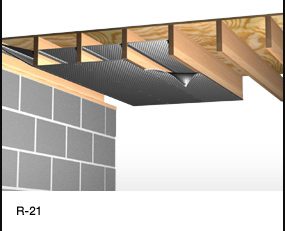
You can run insulation perpendicular to the bottom of the floor joists or use Tempshield staple tab foil insulation to insulate between the floor joists. Either way you’ve created a radiant barrier to block the transfer of radiant heat.
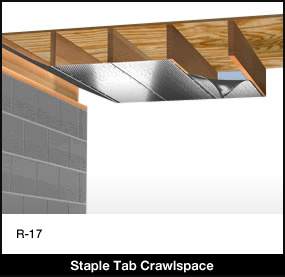
This installation is also perfect for beneath floors with radiant heat. When you insulate under the floor joist, the lost radiant heat from the floor is reflected back decreasing your energy demand. This is especially important in crawlspaces that are not air sealed during your heating season. You can easily have a 50 degree temperature swing between the inside temperature of your home and that of your crawlspace. Putting a radiant barrier in place can be a quick, inexpensive project that can insulate a key area of your home with immediate savings in your heating bills.

Comments (2)
I laid the bubble foil on top of my floor joists and then put a subfloor of 1X8s on top of that. It is an unfinished cabin 2 feet above the ground on piers with no skirting . There is a roof, but the cabin is not sealed up and it is in a humid, cold canyon bottom with lots of precipitation. So much water has built up on top of the joists under the sub floor that it has pooled up and is cupping my sub floor badly. If I can get the cabin sealed up will it continue to collect water and rot out my joists and sub floor, or should I cut all of the bubble foil out? I cut slits in the foil to let some of the water drain and gallons came out of each joist section.
Hello. You have an atypical installation. The closest it resembles a typical installation would be an unvented crawlspace. Many times if moisture is a problem the first step is to put a ground sheet down to stop the moisture transfer from the ground. Unfortunately we cannot answer with confidence if sealing the cabin would prevent moisture gain as the underside of the building will still be suspect until the gound moisture is taken care of. From your description having the vapor barrier under the joists would be the ideal placement stopping moisture from getting to the building structure.